
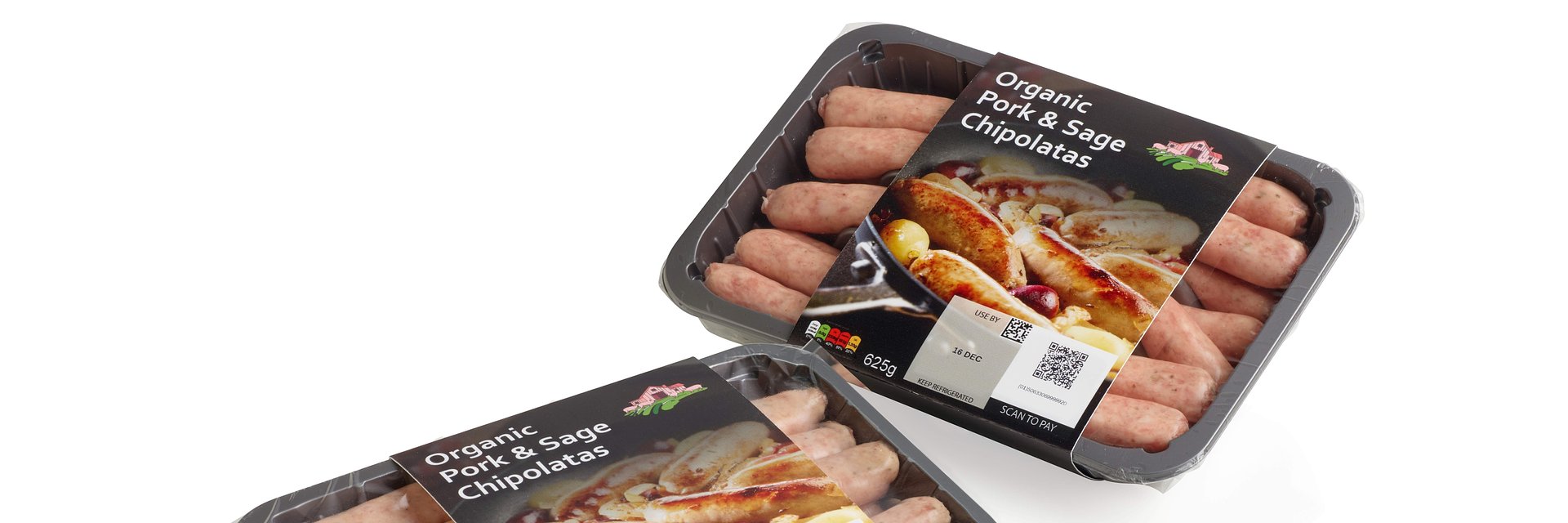
Food safety and waste reduction are becoming closely aligned as food manufacturers embrace traceability, connected packaging, and 2D codes powered by GS1 to protect consumers and reduce waste, explains, Jim Orford, Global Account Manager, Domino Printing Sciences.
Food manufacturers have always taken food safety seriously, with long-standing systems, audits, and controls in place to protect consumers. Despite these safeguards, recalls are often necessary to protect public health in the event of a food safety incident. Inevitably, when food recalls occur, a secondary problem arises: avoidable waste.
The majority of this waste is the result of uncertainty. Without accurate, batch-level product traceability, food safety teams are forced to take precautionary actions. Products produced in the same shift, line, or day may be withdrawn together, even when only a small subset is affected. While this caution is justified from a public health perspective, it is wholly inefficient in terms of overall product wastage.
Compliance is changing from documentation to evidence
As food waste reduction targets become increasingly embedded within regulatory and policy frameworks, this imbalance is no longer being overlooked. Modern food safety regulations, including the Food Safety Modernization Act (FSMA) in the USA, are shifting the emphasis towards speed and granularity. Authorities want to know not only that food can be traced, but how quickly affected products can be identified and removed from the supply chain.
With shifting regulatory expectations, traditional traceability systems are no longer enough. Paper-based records demonstrate compliance after the event. Controls exist, but information is slow and labour intensive to review, and difficult to reconcile across multiple partners in complex supply chains.
Why packaging - level data matters
Reliable traceability demands accurate and accessible product, production, and shelf-life information. While historically, only a fraction of this information was accessible once products had left the factory, the introduction of 2D codes powered by GS1 on food packaging is transforming visibility throughout the supply chain.
With connected food packaging, manufacturers can link each pack to structured, standards - based traceability data that remains accessible throughout a product’s lifecycle.
When safety concerns are raised, clearer packaging - level data enables a faster, more effective food recall process. Manufacturers can rapidly confirm the specific products affected. The number of items withdrawn is limited only to those included within the compromised batches, ensuring good food is not unnecessarily wasted. For retailers, this improved traceability reduces the time and cost associated with removing safe food from sale.
Freshness, safety, and timing
Connected packaging equipped with 2D codes can also transform the way food is managed throughout the supply chain long before safety issues arise. Food that remains too long in distribution or retail can raise safety concerns as well as increasing wastage.
Access to accurate, standardised expiration and production information can help supply chain partners to manage stock more effectively. Retailers can improve stock management, using dynamic pricing on shop floors, for example, to discount products before they expire. The same protocols can be used to ensure goods scanned at point of sale are flagged if expired or recalled, preventing the unintentional sale of unsafe food products. This strengthens food safety controls while aligning with waste prevention goals.
A systems view of responsibility
This shift to consider food waste alongside safety is an important change in intent. The use of 2D codes powered by GS1 is emerging as part of a broader move towards the use of interoperable, trusted data across food systems.
For manufacturers, the ability to improve recall precision has far reaching benefits. In addition to reducing unnecessary food waste without incurring additional risk, the ability to demonstrate stronger food safety compliance builds confidence with both retailers and regulators.
Crucially, this is not about replacing existing systems or embarking on wholesale transformation. It is about strengthening the link between food safety and waste reduction by improving how information is shared and acted upon.
Looking ahead
As expectations rise, manufacturers will be judged not only on whether they respond to food safety incidents, but on the speed and efficiency of the response. Leveraging 2D codes powered by GS1 enables manufacturers to demonstrate an evidence-based food recall process. It supports waste reduction goals without any compromise to consumer protection. With better packaging-level data, shared through trusted standards, manufacturers can achieve a precise, accurate and trusted approach to food recalls that reinforces safety whilst also significantly reducing food waste.
<ENDS>
Disclaimers
Inks
The information contained in this document is not intended as a substitute for undertaking appropriate testing for your specific use and circumstances. Neither Domino UK Limited nor any of Domino’s group of companies is in any way liable for any reliance that you may put on this document with regards to the suitability of any ink for your particular application. This document does not form part of any terms and conditions between you and Domino, Legal Disclaimers v.1.0 February 2018 and Domino’s Terms and Conditions of sale, and in particular the warranties and liabilities contained within them, shall apply to any purchase of products by you.
General
Information contained within this press release is considered to be true and correct at the date of publication by Domino, changes in circumstances after the time of publication may impact the accuracy of the information. All performance related figures and claims quoted in this document were obtained under specific conditions and may only be replicated under similar conditions. For specific product details, you should contact your Domino Sales Advisor. This document does not form part of any terms and conditions between you and Domino.
Imagery
Images may include optional extras or upgrades. Print quality may differ depending on consumables, printer, substrates, and other factors. Images and photographs do not form any part of any terms and conditions between you and Domino.
Videos
This video is illustrative only and may include optional extras. Performance figures obtained under specific conditions; individual performance may vary. Errors and downtime on production lines may be unavoidable. Nothing in this video forms part of any contract between you and Domino.
Notes to Editors:
About Domino
Since 1978, Domino Printing Sciences (Domino) has established a global reputation for the development and manufacture of coding, marking, and printing technologies, as well as its worldwide aftermarket products and customer services. Today, Domino offers one of the most comprehensive portfolios of complete end-to-end coding solutions designed to satisfy the compliance and productivity requirements of manufacturers across many sectors, including food, beverage, pharmaceutical, and industrial. The company’s core technologies include innovative inkjet, laser, print and apply, and thermal transfer overprinting systems designed for the application of variable data, barcodes, and unique traceability codes onto product and packaging.
Domino employs over 3,000 people worldwide and sells to more than 120 countries through a global network of 29 subsidiary offices and more than 200 distributors. Domino’s manufacturing facilities are located in China, Germany, India, Sweden, Switzerland, UK, and the USA.
Domino became an autonomous division within Brother Industries Ltd. on 11th June 2015.
For further information on Domino, please visit www.domino-printing.com
Or contact:
Jade Taylor-Salazar
PR and Content Manager
Domino Printing Sciences
Tel: +44 (0) 1954 778780
Jade.Taylor-Salazar@domino-uk.com
Mahmoud Al Sabbagh
General Manager
Domino Dubai
Tel: +97148835003
Email: sales@domino-mea.com
Inks
The information contained in this document is not intended as a substitute for undertaking appropriate testing for your specific use and circumstances. Neither Domino UK Limited nor any of Domino’s group of companies is in any way liable for any reliance that you may put on this document with regards to the suitability of any ink for your particular application. This document does not form part of any terms and conditions between you and Domino, Legal Disclaimers v.1.0 February 2018 and Domino’s Terms and Conditions of sale, and in particular the warranties and liabilities contained within them, shall apply to any purchase of products by you.
General
Information contained within this press release is considered to be true and correct at the date of publication by Domino, changes in circumstances after the time of publication may impact the accuracy of the information. All performance related figures and claims quoted in this document were obtained under specific conditions and may only be replicated under similar conditions. For specific product details, you should contact your Domino Sales Advisor. This document does not form part of any terms and conditions between you and Domino.
Imagery
Images may include optional extras or upgrades. Print quality may differ depending on consumables, printer, substrates, and other factors. Images and photographs do not form any part of any terms and conditions between you and Domino.
Videos
This video is illustrative only and may include optional extras. Performance figures obtained under specific conditions; individual performance may vary. Errors and downtime on production lines may be unavoidable. Nothing in this video forms part of any contract between you and Domino.
Notes to Editors:
About Domino
Since 1978, Domino Printing Sciences (Domino) has established a global reputation for the development and manufacture of coding, marking, and printing technologies, as well as its worldwide aftermarket products and customer services. Today, Domino offers one of the most comprehensive portfolios of complete end-to-end coding solutions designed to satisfy the compliance and productivity requirements of manufacturers across many sectors, including food, beverage, pharmaceutical, and industrial. The company’s core technologies include innovative inkjet, laser, print and apply, and thermal transfer overprinting systems designed for the application of variable data, barcodes, and unique traceability codes onto product and packaging.
Domino employs over 3,000 people worldwide and sells to more than 120 countries through a global network of 29 subsidiary offices and more than 200 distributors. Domino’s manufacturing facilities are located in China, Germany, India, Sweden, Switzerland, UK, and the USA.
Domino became an autonomous division within Brother Industries Ltd. on 11th June 2015.
For further information on Domino, please visit www.domino-printing.com
Or contact:
Jade Taylor-Salazar
PR and Content Manager
Domino Printing Sciences
Tel: +44 (0) 1954 778780
Jade.Taylor-Salazar@domino-uk.com
Mahmoud Al Sabbagh
General Manager
Domino Dubai
Tel: +97148835003
Email: sales@domino-mea.com