
Choosing the right printing equipment
2D codes powered by GS1 are multi-functional data carriers of manufacturer, pricing, and consumer information, and the stakes for getting them right are high. Codes that fail to scan can damage retailer and consumer trust and reflect negatively on the packaging supplier, making the selection of appropriate printing and verification equipment, as well as workflows, essential for converters.
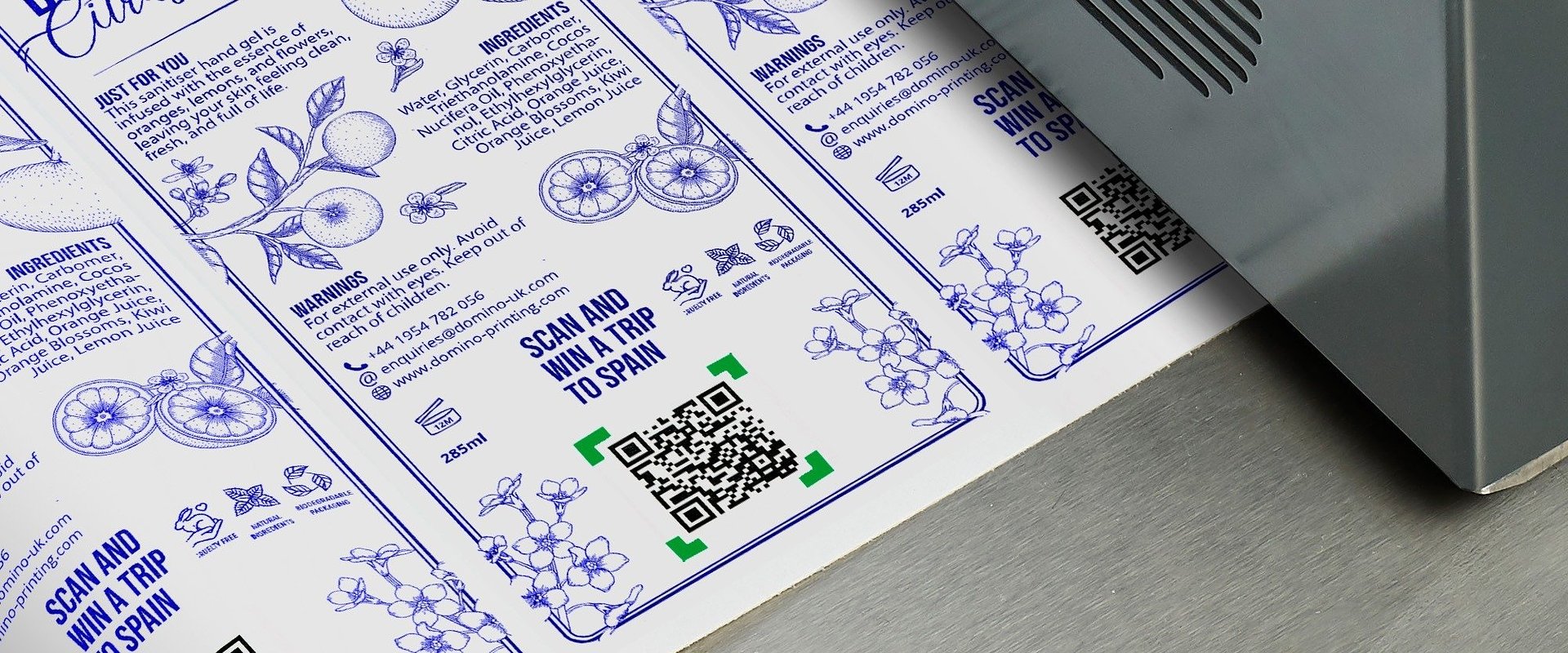
A key consideration will be a brand’s choice of static or variable QR codes and the required volumes. Static codes essentially replace a GS1 EAN-13 barcode at the point of sale, including the product’s Global Trade Item Number (GTIN) and an optional fixed URL for consumer scanning. These codes are standardised, provided by the brand as part of the artwork, and can be printed in bulk using analogue or digital processes, provided the required resolution and quality standards are met.
Variable and serialised 2D codes incorporating item-specific information on batch level or unique identifiers (i.e. for anti-counterfeiting), unlock higher value for brands but are more complex to produce. Production at scale demands a digital printing workflow with variable data capability. Options include a digital label press or corrugated press printing both artwork and the variable codes, a monochrome inkjet printer overprinting codes as part of a hybrid line, or offline late-stage customisation of pre-printed labels and packaging.
Brands will also have different approaches to generating variable 2D codes. Converters may need to license one or more third-party APIs to link the codes to a database supporting digital product passports with the required consumer, retail, and supply chain information. Close collaboration with API provider(s) and press workflow vendor will be needed to configure secure connections and data transfer protocols, enabling automatic assignment of unique codes.
Serialisation may also require just-in-time data alignment between customer manufacturing and label production to avoid scrap or recalls, as well as the setup of processes to manage rejects.
Ensuring QR code scanning quality
Print quality, clarity, and contrast are key to consistent, real-world GS1 QR or DataMatrix code scanning. Potential issues to consider include distortion by dot gain and ink spread on the substrate in flexo and digital inkjet processes, as well as poor ink adhesion, drying, and curing, which can reduce code durability.
The colour and finish of the substrate can also affect 2D code readability. Glossy or reflective substrates can cause glare, while coloured backgrounds can reduce contrast, preventing proper code reading.
To avoid issues at the point of sale, converters should verify QR codes during the printing process to highlight potential readability issues. Existing vision systems can monitor print quality, but achieving scan consistency irrespective of lighting, capture distance, and speed of point-of-sale, supply-chain, and consumer scanning environments demands more sophisticated technology.
By grading code quality, verifiers identify substandard codes and ensure codes can be reliably read across scanning technologies. While vision systems also hold or can be upgraded with code verification capabilities, some converters will need to upgrade to a new vision system or camera technology. Early consideration of compatibility with existing printing equipment and workflows, software support for verification standards, integration support from equipment vendors, and the system’s ease of use and any potential training needs will maximise return on investment.
Ensuring quality standards compliance
Unlike unregulated campaign QR codes, GS1 QR and DataMatrix codes are expected to meet a minimum print grade of 1.5 per ISO/IEC 15415:2024, the international standard for assessing the accuracy and readability of printed 2D codes, to maintain high read rates at the retail checkout. By demonstrating compliance via quality logs, verification reports, and samples to support audits and regulatory requirements, converters can build trust and reassure brands.
Converters also need to work closely with brands to define the parameters and contractual responsibilities for their 2D code application. This could include clarifying code generation responsibilities, assigning liability for duplicates or failures, and specifying audit and verification protocols. Open, ongoing communication aligns converters with brand requirements and helps anticipate challenges.
Communication as the key to success
As brands accelerate their 2D code strategies, communication between converters and brands will play an important role in clarifying contractual responsibilities and pre-empting potential issues. Early understanding of a brand customer’s applications and future plans will help converters to prepare and invest in the required technology.
Acting now and partnering with a digital printing supplier that is an expert in advanced variable data printing and at the forefront of emerging packaging regulations, will position converters as the strong partner and advisor brands will trust to successfully make the transition to 2D codes.
ENDS
Disclaimers
General
Information contained within this press release is considered to be true and correct at the date of publication by Domino, changes in circumstances after the time of publication may impact the accuracy of the information. All performance related figures and claims quoted in this document were obtained under specific conditions and may only be replicated under similar conditions. For specific product details, you should contact your Domino Sales Advisor. This document does not form part of any terms and conditions between you and Domino.
Inks
The information contained in this document is not intended as a substitute for undertaking appropriate testing for your specific use and circumstances. Neither Domino UK Limited nor any of Domino’s group of companies is in any way liable for any reliance that you may put on this document with regards to the suitability of any ink for your particular application. This document does not form part of any terms and conditions between you and Domino, Legal Disclaimers v.1.0 February 2018 and Domino’s Terms and Conditions of sale, and in particular the warranties and liabilities contained within them, shall apply to any purchase of products by you.
Imagery
Images may include optional extras or upgrades. Print quality may differ depending on consumables, printer, substrates, and other factors. Images and photographs do not form any part of any terms and conditions between you and Domino.
Videos
This video is illustrative only and may include optional extras. Performance figures obtained under specific conditions; individual performance may vary. Errors and downtime on production lines may be unavoidable. Nothing in this video forms part of any contract between you and Domino.
Notes to Editors:
About Domino
Digital Printing Solutions is a division within Domino Printing Sciences. The company, founded in 1978, has established a global reputation for the development and manufacture of digital inkjet printing technologies, as well as its worldwide aftermarket products and customer services. Its services for the commercial print sector include digital inkjet printers and control systems designed to deliver solutions for a complete range of labelling, corrugated, and variable printing applications.
All of Domino’s printers are designed to meet the high-speed, high-quality demands of commercial printing environments, bringing new capabilities to numerous sectors, including labelling, corrugated, publications and security printing, transactional, packaging converting, plastic cards, tickets, game cards and forms, as well as the direct mail and postal sectors.
Domino employs over 3,000 people worldwide and sells to more than 120 countries through a global network of 29 subsidiary offices and more than 200 distributors. Domino’s manufacturing facilities are located in China, Germany, India, Sweden, Switzerland, UK, and the USA.
Domino became an autonomous division within Brother Industries Ltd. on 11th June 2015.
For further information on Domino, please visit www.domino-printing.com
For more information, please contact:
Kathrin Farr
Content Executive and Copywriter
Domino Printing Sciences
Tel: +44 (0) 1954 782551
Kathrin.Farr@domino-uk.com
Jade Taylor-Salazar
PR and Content Manager
Domino Printing Sciences
Tel: +44 (0) 1954 778780
Jade.Taylor-Salazar@domino-uk.com